Have you ever wondered why a single headline can nudge prices in minutes and then shift again after follow-up reports? That quick, repeatable sequence often looks chaotic, but there is a clear logic behind it.
First, you get facts and expectations. Credible information moves faster than opinion, and uncertainty can drive the biggest price swings. Timing matters: modern trading speed compresses the response window, so what took days now unfolds in minutes.
You’ll learn how investors process the first headline, then re-price as new details arrive. The guide also previews a real-time geopolitical shock used as an example and explains how volatility can rise even when initial price changes look small.
As you read, use the playbook approach here to spot the first signal, watch the follow-ups, and decide whether you act like a long-term investor or a short-term trader. For a deeper contrast between horizons, see this piece on investing versus speculating.
What’s driving today’s market mood in the U.S. session
Today’s U.S. session feels calm at first glance, yet several fast-moving price cues are quietly shifting risk. U.S. stock futures fell early on a sharp risk-off impulse, then found dip-buying. At the same time, the dollar (DXY) sits near five-week highs.
Why “contained” moves can still signal rising volatility
Indexes may show limited damage at the close, but positioning and hedging costs can widen intraday ranges. WTI jumped toward $73.50 before easing toward $71.50, Brent spiked near $80 and pulled back, and natural gas surged roughly 22%.
Why the first hours after breaking news matter for price discovery
The earliest hours are when spreads widen, liquidity thins, and traders test where value is. You saw fear sell first and liquidity step in soon after—that pattern can repeat within the same hour multiple times.
Watch the session in this order: energy first, dollar second, equities third. Over the next hours, see whether volatility fades or keeps pushing prices around.
How market reactions form when headlines hit
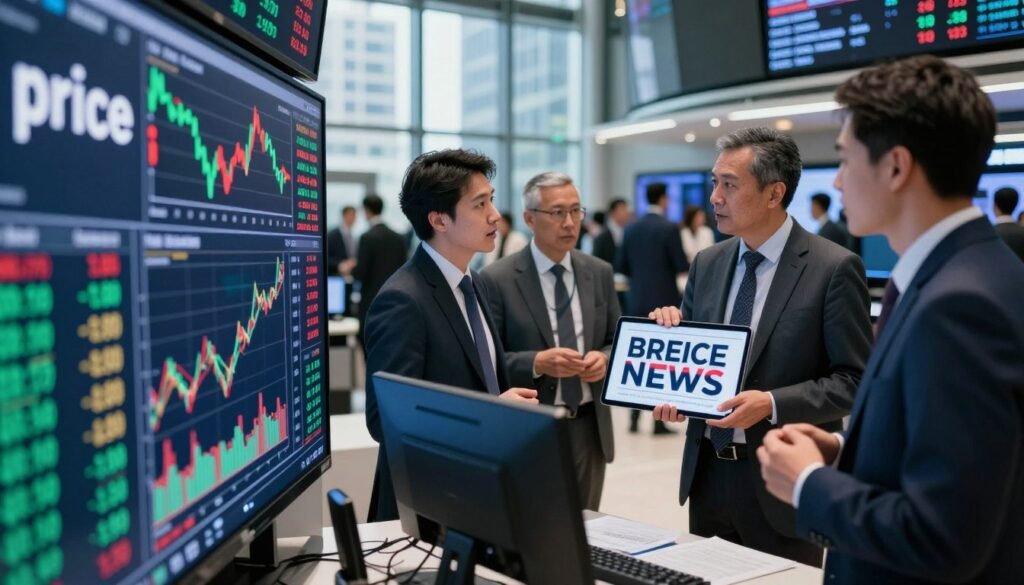
When headlines arrive, prices move in two clear stages: widely expected outcomes get priced in, and credible surprises force a fast repricing. You learn to tell which is which by watching how quickly quotes shift and which participants lead the trade.
Pricing in vs. repricing: what changes when new information is credible
“Pricing in” means the outcome was already reflected in the bids and offers. “Repricing” happens when verified facts or official statements change probabilities and push the price to a new level.
Not every headline moves the tape. Verified content, confirmed by a trusted source, usually causes the lasting moves you can trade from. For more on evaluating credibility, see this short guide on credible information sources.
Why uncertainty can move markets more than the news itself
Uncertainty widens expected outcomes. When distribution tails grow unclear, spreads widen and intraday ranges jump. That friction often affects the price more than the headline detail.
Risk-on and risk-off: how sentiment rotates across stocks, crude, and the U.S. dollar
Sentiment shifts show up as flows: equities weaken, crude may spike, and the dollar can either rally or fall depending on global demand for safety. Watch these assets together to avoid overreacting to a single chart.
The role of market data, sources, and speed in modern trading
Fast participants react first, slower ones confirm later, and that order shapes intraday swings. Which data feed you trust, and which source moves other traders, determines the gap between the price you see and the price you get.
Practice spotting what’s new, what’s credible, and what was already expected. For a checklist on evaluating risk and information, see this resource on risk evaluation.
Energy prices as the fastest news barometer: oil, gas, and supply risk
You’ll often see oil and gas quotes move before other assets fully digest a headline. Energy tends to price supply risk quickly, giving you an early read on whether a story is minor or systemic.
WTI crude’s gap higher and what it implies for U.S. inflation expectations
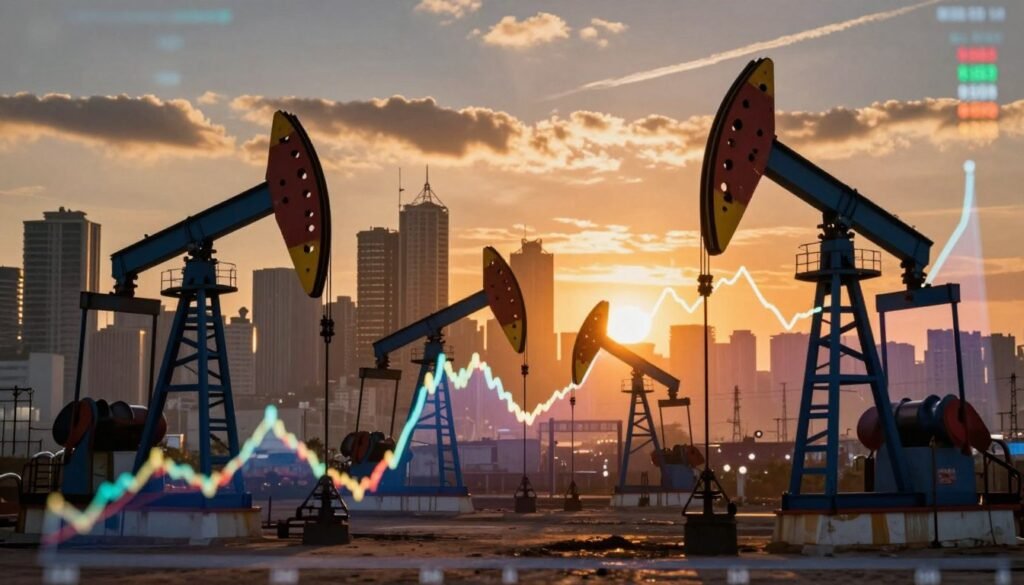
WTI gapped up toward $73.50 before easing back near $71.50, roughly +6.5% versus Friday’s close. That jump matters because higher oil prices raise transport and manufacturing costs.
If that pass-through persists, you can expect upward pressure on core inflation measures and on the outlook for interest rates.
Why Brent’s sharper spike signals global supply worries
Brent ran closer to a 10% gap toward $80 and only partially retraced. When Brent moves more than WTI, traders often worry about international shipping routes or a disruption to global supply chains.
That gap flags demand and geopolitical risk outside the U.S., and it can amplify price uncertainty worldwide.
Natural gas surges and how energy volatility can spill into stocks
Natural gas jumped about 22%, a reminder that gas price swings are violent and fast. Rising utility and industrial costs squeeze margins and can weigh on equities via higher input costs.
Traders map scenarios—temporary disruption, extended disruption, worst case—so watch intraday retracements closely; a pullback may only wait for confirmation, not erase the underlying supply risk.
Middle East conflict risk and the Strait of Hormuz: why geopolitics can reprice everything
A strike on a facility or a missile launch can ripple through shipping lanes and energy costs almost immediately.
U.S. and Israeli strikes on IRGC facilities and missile launchers, followed by regional retaliation, show how a single attack can become a wider middle east conflict. You should track statements and shipping notices closely: the first confirmations alter odds fast.
Why “duration risk” matters when war headlines extend day after day
When war continues day after day, pricing shifts from single events to length and persistence. Traders begin to add a premium for time and uncertainty.
That premium changes valuations across sectors, especially energy and trade-sensitive industries.
What a Hormuz disruption historically signals for oil prices and global trade
The Strait of Hormuz matters because more than 90% of oil flows to Asia pass nearby. Even a perceived threat can spike risk premia.
Historic closures in the 1970s show how a chokepoint can trigger global supply stress and higher oil costs.
How attacks, missiles, and facility strikes translate into positioning
Traders translate headlines into hedges: they reduce energy exposure, rotate to safe assets, and buy protection. Follow-up reports—confirmation, escalation, or de‑escalation—often move prices more than the first alert.
If the iran war narrative widens into regional spillover, wider premiums for trade and logistics follow. For ongoing guidance see this analysis for investors investors warned to brace for fallout.
From safe havens to dip-buying: how stocks, crypto, and the U.S. dollar respond
When global tension spikes, the U.S. dollar often moves before stocks or crypto do. That early DXY strength shows liquidity seeking safety and a returning petrodollar trade as energy and geopolitics collide.
DXY strength and the petrodollar effect during Middle East crises
DXY at five-week highs signals cash demand, not a simple good-or-bad call. In a crisis, global holders prioritize liquidity and safety over yield.
The petrodollar effect can reinforce the dollar when energy flows and trade settlements shift toward U.S. invoices. Watch dollar moves as an early read on where risk is moving.
Why U.S. stock futures can fall first, then rebound on dip-buying
Futures often drop in the session after a shock as algos and hedges reprice. That initial sell-off can attract dip-buying if traders judge the worst case unlikely.
Read the first hours for cues: does buying hold or fade? If S&P futures stabilize and stocks sniff value, the session can flip from fear to selective buying.
Crypto’s whipsaw moves and what bounce behavior can mean for risk appetite
Crypto sells off quickly on risk-off impulses, then can spike back when traders chase liquidity. Bitcoin sitting above its 200-day moving average near $69,000 is a key trend reference.
Use these signals to guide your investment and services choices. Focus on what’s actionable, ignore noisy content, and avoid letting fast swings force poor timing in your stock and investment decisions.
Why policy news can overpower bad headlines: what COVID-era research still teaches you
A clear policy announcement can cut through noise and reframe risk in a single session. During crises, credible policy alters liquidity, discount rates, and confidence—so you often see price swings tied to that information rather than the scary headline itself.
How rate cuts and lockdown orders moved stock prices in studies
Difference-in-differences research from the COVID era shows both lockdown orders and interest rate cuts had positive effects on stock performance. Rate-cut announcements produced larger and quicker gains, including the Fed’s 50 bps cut on March 3, 2020.
Why central bank signals lift investor sentiment faster than fundamentals
Central bank language shapes expectations. When officials signal easing, investors and traders treat that as high-impact data and often reprice risk assets before earnings or growth change.
Applying the lesson during a war-driven shock
If war headlines push energy and inflation higher, the policy reaction function becomes crucial. Watch for credible policy offsets—those announcements can calm the market and help stocks recover even while uncertainty persists.
Conclusion
Prices adjust fast because traders constantly update odds as fresh facts clear doubts.
In march 2026 the middle east conflict has pushed oil and gas to lead early moves, which then shape the dollar, stock flows, and wider sentiment.
In future shocks, watch this sequence: energy first, the dollar next, then whether equities stabilize or stay under pressure. The first few hours are where price discovery and positioning shift most.
“Contained” intraday moves can still hide rising volatility when war risks persist. Policy signals from central banks or governments can outweigh bad headlines for a time.
Stick to verified info, avoid impulse trades, and monitor conflict duration, supply risk, and whether prices confirm escalation or begin to normalize.