
Can you protect your daily cash flow and still make smart long-term choices when prices feel out of control?
This guide starts by giving you a clear picture of why financial survival during inflation is mostly about guarding your day-to-day cash flow while keeping long-term plans intact.
We’ll move from simple definitions to actionable steps you can use right now. You’ll learn how to adjust your budget, shift income strategies, and manage savings and debt.
Expect a practical focus: control the spending categories you can change, make substitution choices, and lower your interest-rate risk. This reduces stress and makes decisions easier.
Rising prices in the economy hit groceries, gas, rent, and services, so the topic links directly to your household cost and daily life. You’ll also get a quick roadmap of terms like price level, price index, CPI, PCE, core measures, and inflation rate to keep you grounded.
This is an Ultimate Guide you can return to when new numbers come out or the Fed changes rates. Read on to stay organized and act with confidence.
Key Takeaways
- Focus on protecting your daily cash flow while preserving long-term goals.
- Learn simple budget shifts and income moves that work now.
- Control spending categories and substitution choices to cut cost pressure.
- Understand key terms like price index, CPI, and the inflation rate.
- Use this guide as a reference when new data or Fed moves appear.
Why inflation hits your wallet and your household budget
When everyday costs climb, your household budget feels tighter even if your income stays the same.
How rising prices reduce purchasing power over time
Small, steady increases in the cost of groceries, gas, and services mean the same dollars buy less. If your paycheck does not rise at the same pace, you lose buying power.
Those monthly upticks compound over a year and can make essentials take a larger share of your take-home pay. That shift forces choices you might not expect.
What “price level” means for the goods and services you buy
Think of the price level as an average for common household items. It bundles many individual price changes into one number you can track.
For your weekly routine, that number reflects shifts in goods like food and in services like child care or repairs.
Inflation, deflation, and disinflation — the differences that matter
Inflation is a rise in the general price level; deflation is a fall. Disinflation means prices still rise, but more slowly. Confusing one for another can lead to poor timing on big purchases or loan decisions.
| Category | Typical Monthly Change | Household Impact |
|---|---|---|
| Groceries (goods) | 0.2%–0.6% | More frequent trade-offs at checkout |
| Energy & gasoline | 0.5%–2% | Direct hit to commute and bills |
| Everyday services | 0.1%–0.4% | Higher routine bills (repairs, care) |
Inflation explained in plain English
Here’s a simple way to see what’s happening when costs rise across the economy.
What it really means
Prices across many everyday items can drift higher, and that steady trend is what changes your buying power over time.
Put differently: this is about the average cost of a broad basket of goods and services, not a single spike at the store.
How to tell the difference
When one item jumps—like eggs or insurance—ask whether the rise shows up across several categories. If it does, you are looking at a general rise. If not, it may be a one-off price change.
| Check | What to look for | What to do |
|---|---|---|
| Multiple categories | Food, fuel, rent, services all moving up | Read broader data, not headlines |
| Duration | Trends over months, not one day | Watch 3–12 month averages |
| Offsetting moves | Some items fall while many rise | Focus on the overall average |
How inflation is measured in the United States
Start by learning the tools used to convert lots of price data into one clear number you can follow.
What a price index is and why it matters
A price index bundles thousands of prices into one value so you can track broad moves. When inflation is measured, economists watch index trends over a month or a year rather than one item at the store.
Consumer Price Index (CPI)
The Consumer Price Index tracks what typical urban consumers pay for goods and services. It is widely cited because it links directly to the consumer experience at the register.
Personal Consumption Expenditures (PCE)
The PCE price measure covers a wider range of household spending and uses changing weights. That broader coverage is why the Fed targets a 2% rate in the PCE price index over the longer run.
Core measures and percent change
Core CPI and core PCE drop food and energy to show the underlying trend. The inflation rate is simply the percent change in a price index over a chosen period (month-over-month or year-over-year).
| Index | Main focus | Why it differs |
|---|---|---|
| CPI | Consumer prices at the household level | Fixed basket, common in media |
| PCE | Broader household consumption | Uses updated spending weights |
| PPI / GDP deflator | Producer prices / economy-wide prices | Can move differently from consumer measures |
What causes inflation in the economy right now
When your grocery bill or gas tab climbs, the cause often falls into one of three categories you can learn to spot.
Demand shocks: sudden shifts in spending and policy
Demand shocks happen when spending jumps faster than supply can keep up. A big stimulus payment or sudden consumer rush on services can cause this.
Changes in fiscal or monetary policy can amplify demand. That means higher demand can push up the cost of goods and services you buy.
Supply shocks: shortages and higher input costs
Supply shocks raise production costs. Think energy disruptions, shipping bottlenecks, or crop shortfalls that lift food prices.
Higher input costs trickle into delivery fees, travel, and the price tags you see at the store.
Money, rates, and expectations
Growth in the money supply and central-bank rate moves affect spending and borrowing over time. Higher rates slow demand; easier monetary policy can boost it.
Expectations matter too: if businesses and consumers expect continued price rises, they may raise prices or wages now, keeping pressure going. For a clear explainer of these channels, see causes of price rises.
| Driver | What it does | What you feel |
|---|---|---|
| Demand shocks | Boosts spending quickly | Full shelves sell out; higher service bookings |
| Supply shocks | Raises input and delivery costs | Higher food and energy bills |
| Money & expectations | Changes borrowing, pay, and pricing | Higher loan costs or faster price rises over time |
What the Federal Reserve is trying to do about inflation
The Fed aims to keep price growth steady so households and businesses can plan with confidence.
The Federal Reserve targets a 2% annual pace in the PCE price index because that rate best matches its dual mandate over the long run. A steady, low target helps anchor expectations so your wages, savings, and borrowing choices are less likely to be upended by surprise moves.
Why 2% matters for you
Stable expectations make it easier to plan. If businesses and workers expect steady price growth, they set wages, prices, and contracts that fit the likely path of costs.
That clarity reduces uncertainty when you decide to save, refinance a loan, or lock in a mortgage rate.
How monetary policy and rates work with a lag
Monetary policy changes financial conditions mainly by moving interest rates and credit availability. Those shifts change spending and hiring, but their full effect shows up only after some time.
When officials say policy works with a lag, they mean today’s rate moves affect the economy over months and into the next year. That is why the Fed acts on expected paths, not only last month’s data.
| Fed action | Transmission channel | Household effect |
|---|---|---|
| Raise policy rate | Higher borrowing costs, tighter credit | Mortgage and loan payments rise; some plans get delayed |
| Hold rates steady | Signal patience; observe trends | Gives you time to shop for rates or adjust savings |
| Cut rate | Easier credit, lower yields | Borrowing cheaper; savings yields may fall |
| Watch core measures | Ignore volatile food/energy swings | Helps separate temporary shocks from lasting trends |
Why the Fed watches longer periods
The FOMC reads averages over months and years to avoid overreacting to noisy monthly movements. They also check subcategories and core measures to see if changes are temporary.
Personal takeaway: Treat Fed moves as a signal to review your debt rates, savings yields, and budget stress points. For a clear explainer of why the Fed cares about this goal, see why the Fed cares.
How to track inflation data without getting overwhelmed
A brief, repeatable routine for watching price data keeps you informed and calm.
Reading month-over-month vs. year-over-year changes
Start by checking month-over-month and year-over-year numbers side by side. A single monthly move shows short-term momentum. A year-over-year reading shows whether prices are still high compared with last year.
Using nowcasts to see where things may be headed
Nowcasts are daily estimates of the present before official releases. For example, the Cleveland Fed’s February 2026 nowcasts show MoM: CPI 0.25, Core CPI 0.21, PCE 0.26, Core PCE 0.24 (02/26). YoY nowcasts read: CPI 2.41, Core CPI 2.46, PCE 2.60, Core PCE 2.74.
| Measure | MoM (Feb 2026) | YoY (Feb 2026) |
|---|---|---|
| Consumer Price Index (CPI) | 0.25% | 2.41% |
| Core CPI | 0.21% | 2.46% |
| PCE (Core PCE) | 0.26% (0.24%) | 2.60% (2.74%) |
Why different indexes can send different signals
Indexes use different baskets and methods, so they can diverge at the same time. That does not mean the numbers are wrong. Treat each index as one lens on prices.
Quick checklist: scan MoM for momentum, check YoY for context, glance at nowcasts for early signals, and only change your budget or debt plans after several consistent moves in the data.
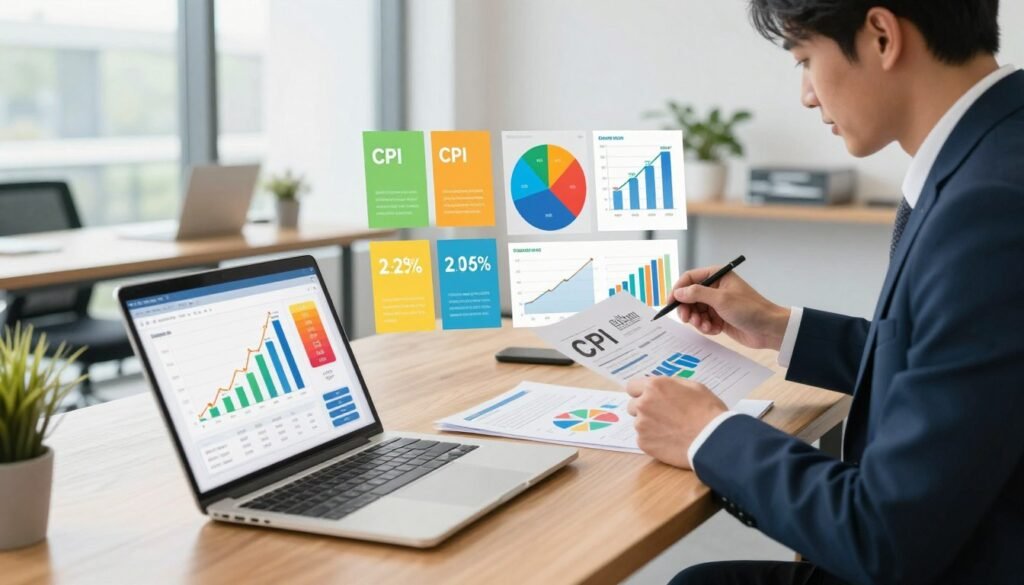
Build a practical anti-inflation plan for your personal finances
Turn data into a simple, repeatable routine that protects essentials and keeps your long‑term goals on track.
Rework your budget around exposed categories
Start by protecting essentials: housing, utilities, groceries, and transportation. Move flexible spending to the bottom of your list so rising prices don’t push you into debt.
Set target envelopes or separate accounts for each major category. That makes it easy to see where pressure builds and where you can cut without pain.
Create a personal price index
Use receipts and bank statements to make a monthly index of what you actually pay. Track a handful of recurring items—milk, gas, electricity, and a common service—to see your household trend.
This personal index gives you a clearer signal than national numbers for planning purchases and wage talks.
Household cash-flow system and smart substitutions
Order your cash flow: bills → essentials → savings/goals → discretionary. Automate the first two so essentials clear first and avoid overdrafts.
Swap brands, shop sales, and shift timing of purchases to save on goods and services. Small changes in purchase timing or where you shop preserve quality while lowering cost.
| Area | Quick action | Why it helps |
|---|---|---|
| Food | Plan meals, buy staples in bulk | Reduces frequent trips and impulse buys |
| Energy | Weatherize, shift high-usage times | Lower bills and smoother monthly spending |
| Services | Review subscriptions, renegotiate plans | Cut recurring drains on cash flow |
Finally, set a weekly quick check and a monthly review. Update your personal index and adjust guardrails so your plan stays useful as prices, consumption, and time change.
Protect your income, savings, and debt strategy during inflation
You can defend your household by tying pay requests, savings, and loan choices to clear cost data and rate expectations.
Negotiate pay and benefits with cost-of-living data you can reference
Ask for a raise using concrete cost-of-living numbers and a short comparison of local services prices. Show how health coverage, retirement match, commuting help, or childcare support affect your net take‑home.
Frame benefits as a package. Sometimes extra paid leave or a larger employer match beats a small raise.
Adjust your saving rate and emergency fund targets
Update your savings rate when your monthly bills rise. Base emergency fund targets on today’s essentials, not last year’s receipts.
Prioritize liquid cash for three to six months of current home and family costs, then rebuild long‑term accounts.
Debt, fixed vs. variable rates, and interest rate risk
Fixed rates lock predictable payments; variable rates follow market moves set by the federal reserve and monetary policy. Refinance a mortgage only after comparing current rates, fees, and time in the home.
Tackle high-rate credit cards first, keep a buffer for variable-rate loans like HELOCs, and treat rate risk as part of your regular review.
| Priority | Action | Why it helps |
|---|---|---|
| Essentials | Cover housing and utilities first | Protect cash flow |
| High-rate debt | Pay down credit cards | Stops rate-driven losses |
| Liquidity | Maintain emergency fund | Buys time to act |

Conclusion
When broad price trends push your monthly bills up, the best defense is a simple, repeatable plan you can use today.
Think of inflation as a general rise in prices that lowers your buying power. Use the tools you learned—indexes like CPI and PCE, core measures, and month‑to‑month versus year‑over‑year reads—to judge the trend, not a single headline.
Keep control by tracking a personal price index, protecting essentials first, and swapping goods and services for cheaper options where it hurts least. Remember that monetary policy and interest‑rate moves affect your loans and savings, so tie decisions to clear data.
Quick steps this week: tweak the budget, review subscriptions, audit high‑rate debt, and check one reliable data release. Small, regular reviews beat trying to time every wave of price pressure.